01
AI-generated images and face manipulation
Review signs associated with synthetic images, face swaps, inpainting, splicing and other forms of digital alteration.
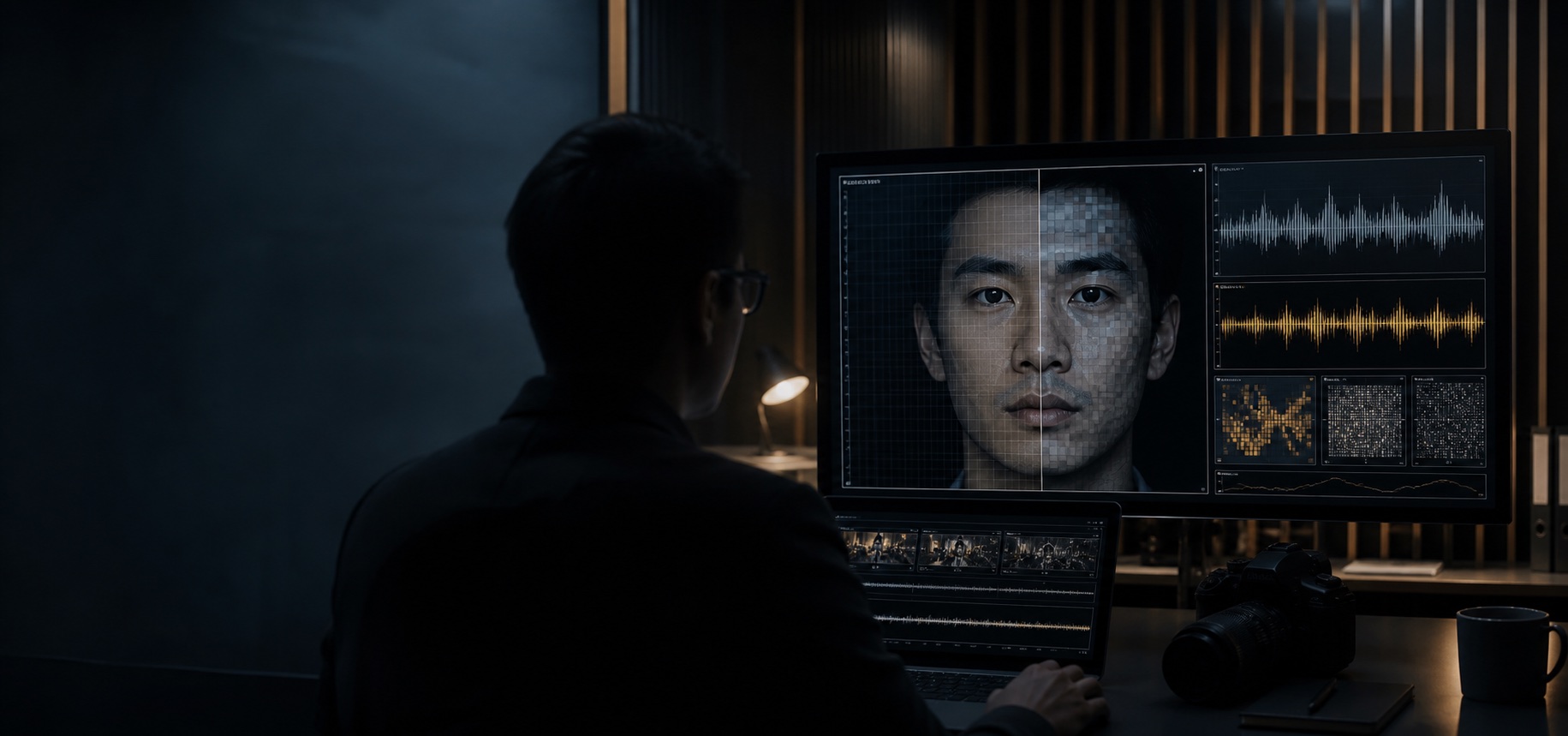
Examine disputed images, video and audio for indicators of synthetic generation or manipulation, with the limits stated clearly.
A suspicious image, recording or video rarely exists in isolation. CPIS reviews the media together with its source, metadata and surrounding evidence. Voice-clone analysis receives the greatest caution because audio alone may not support a reliable verdict.
Complete the form below to enquire about Deepfake & AI-Generated Media Detection. A CPIS case handler will contact you confidentially.
Review signs associated with synthetic images, face swaps, inpainting, splicing and other forms of digital alteration.
Examine visual continuity, lip synchronisation, compression, source history and other indicators relevant to manipulated video.
Assess suitable recordings and the surrounding communication trail. Audio detection is less reliable and more sensitive to duration, compression, background noise and the channel through which it was recorded.
Compare the media with original files, account activity, publication history and other evidence that may support or contradict authenticity.
We identify and retain the original or highest-quality file available, document its source and calculate hashes where appropriate.
File properties, editing history, compression and available source information are examined before interpreting detector output.
Case-appropriate visual, audio and contextual methods are assessed together. Significant tools and versions are recorded, and no single automated detector is treated as definitive proof.
Findings distinguish observed indicators from conclusions, state limitations and alternative explanations, and identify when the material is inconclusive or requires a separately qualified expert scope.
Voice-clone detectors can be affected by new generation models, short samples, telephone channels, compression and background noise. CPIS will not label a recording authentic or synthetic from a detector score alone. The report states the strength of the evidence and should not be treated as the sole basis for a court, HR or personal decision.
Speak directly with a licensed investigator. Free, fully confidential, no obligation, most matters can be assessed in a single call.